Why pickleball can leave muscles feeling tired
A typical session involves lots of short sprints, quick lateral steps, staying low at the kitchen line, and repeated swings and dinks. Do that across several games and it’s normal for your legs, arms, and shoulders to feel worked.
Hard courts, long weekend sessions, and playing more often than usual can all add to that tired feeling.
Common areas players may want to relax after playing
- Calves — from constant movement and staying on your toes.
- Quads and hamstrings — from lunging and staying in a ready stance.
- Glutes and hips — from lateral shuffles and quick direction changes.
- Forearms — from gripping the paddle (stay on the muscle, away from the elbow joint).
- Shoulders and upper back — from serves, overheads, and reaching volleys.
When people typically use massage guns
After playing: the most common time — a few minutes per area as part of a cool-down, alongside water and some light stretching.
Later that evening: many people prefer to relax at home on the couch. A quiet massage gun makes that easier around family.
Before playing: some players use a short, light session alongside their usual warm-up. It isn’t a replacement for warming up.
Start on a low setting, keep moving the head, and stop if anything feels uncomfortable.
Portable recovery for the court, car, or home
The best massager is the one you actually have with you. A compact device that fits in a paddle bag or glovebox is easy to use between games or right after your last match. Read more in our portable massage gun guide.
Where Stillwell fits
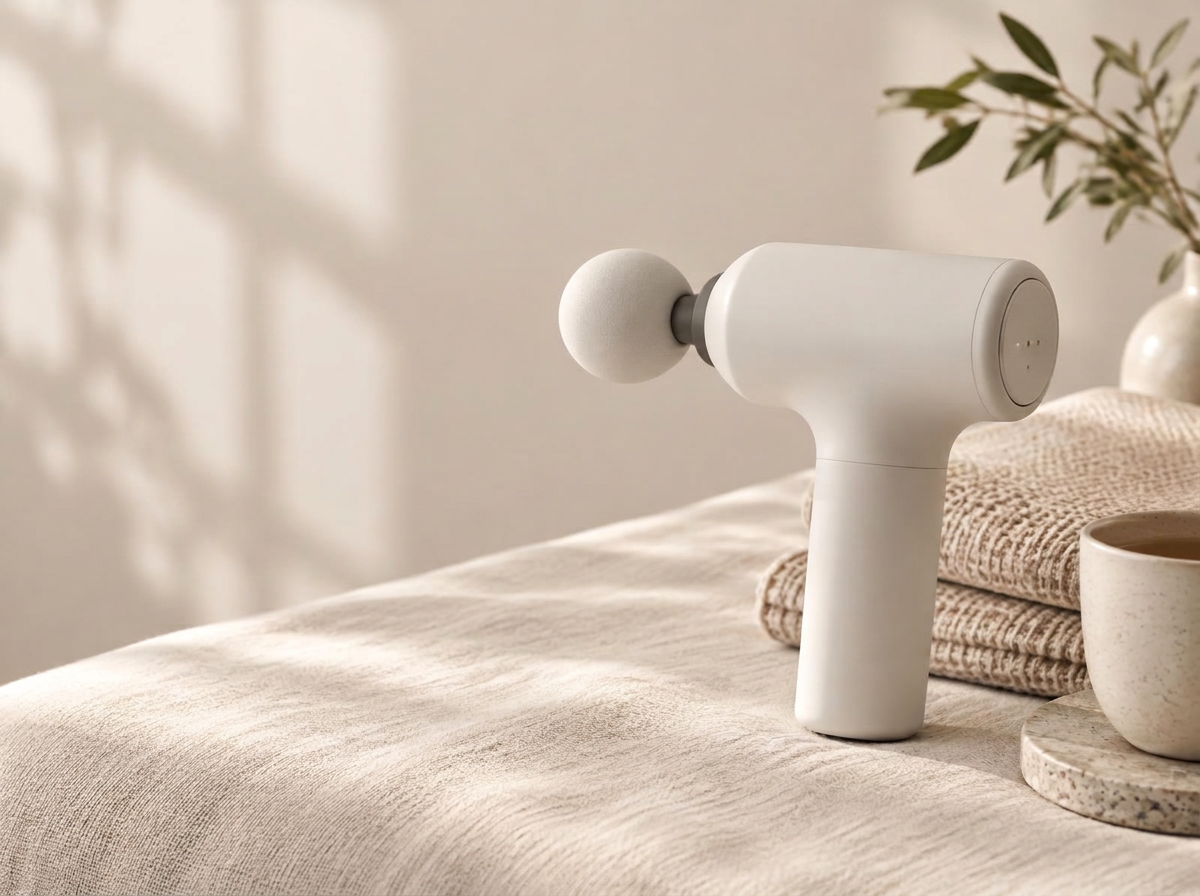
The Stillwell Percussion Massager is designed for everyday players, not just elite athletes — quiet, simple to use, and easy to bring along. It’s in pre-launch now, with a planned price of $119.